




You select the right vfd for pump applications by matching the vfd to your pump and motor specifications. When you pair a vfd with the pump and motor that fit your needs, you improve energy efficiency and cut costs. You also reduce mechanical stress on the pump, which helps the pump last longer and lowers maintenance. Canroon’s experience in pump solutions makes it easier for you to choose the best vfd for pump setups in 2026. You will find practical steps, key criteria, and a checklist to help you make smart pump decisions.
Key Takeaways
Pick the right VFD by matching it to your pump and motor. This helps save energy and lowers costs.
Know your pump's flow rate and pressure before you pick a VFD. This helps your pump work well and stops problems later.
Look at the motor type and voltage to see if they fit with the VFD. This is important for safe and smooth running.
Think about things around the VFD that could change how it works. Keep it safe from dust, heat, and chemicals to make it last longer.
Use Canroon's help and checklist so you do not make mistakes when picking a VFD. This makes sure your pump system works well.
What Is a Variable Frequency Drive Pump?
VFD Basics for Pump Applications
A variable frequency drive pump lets you change how fast your pump motor runs. This helps you make the pump work just right for your system. The main parts of a vfd system work together to give you good control. Here is a table that lists the important parts and what they do:
You can use a vfd with both induction motors and synchronous motors. This lets you change the pump speed smoothly. You can use sensors to tell the vfd when to speed up or slow down. This helps stop electrical overloads and keeps the pump safe from sudden shocks. You also save energy because the pump only works as hard as it needs to.
Why VFDs Matter for Pumps
Using a vfd with your pump gives you many good things. You can change the pump speed when you need more or less water. This means you do not waste energy when you need less flow. You also save money because the pump does not always run at top speed.
You can control the flow without using dampers or valves, which are not as good.
You get better control over how fast and how strong the motor runs, which helps the pump work well.
You make the pump last longer by running it at the right speed. This stops too much stress and keeps it from breaking early.
You can use pump affinity laws to save even more energy.
A variable frequency drive pump helps keep water levels steady and lowers the total dynamic head in your system. This is helpful if you have long pipes or fast-moving water. You lose less energy from friction, and your pump works better. When you use a vfd, your pump can speed up or slow down to fit what you need. This means you spend less on energy and fixing the pump.
Tip: Pick the right vfd and use it to control speed and flow. This will help your pump system work better and last longer.
VFD for Pump: Selection Steps
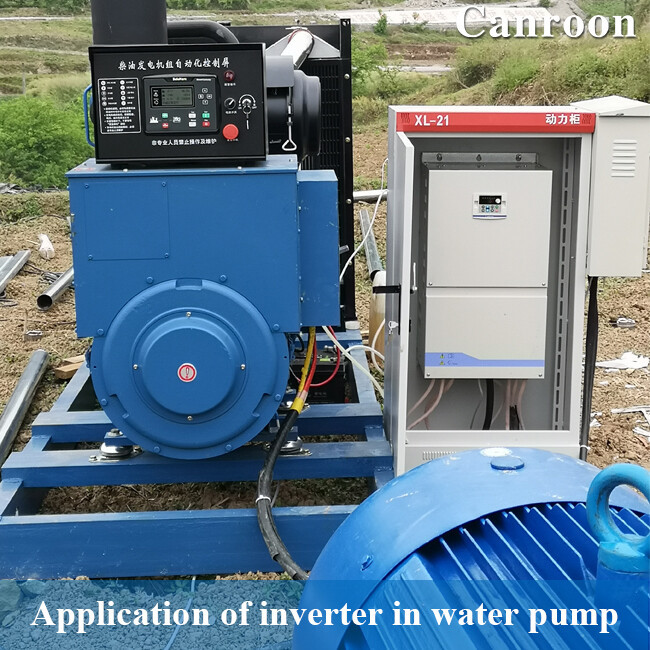
Choosing the right vfd for pump applications means you need to look at several important factors. You want your pump to work well, last longer, and save energy. Canroon’s solutions help you match the vfd to your pump and motor for your specific application. Follow these steps to make sure you pick the best vfd for pump setups.
Define Flow Rate and Pressure
Start by figuring out the flow rate and pressure your pump needs. Flow rate and pressure tell you how much water or fluid your pump must move and how strong it needs to push. You must know these numbers for your specific application. Write down the flow rate and pressure for your pump system. Think about how your pump will work during busy times and slow times.
Tip: Always check the flow rate and pressure for your pump before you choose a vfd for pump. This helps you avoid problems later.
You also need to look at the fluid’s characteristics. Is it thick, hot, or does it have solids? These details change how your pump and vfd work together. System requirements like pipe size and control methods also matter. When you know the flow rate and pressure, you can match the vfd for pump to your system requirements.
Match Motor Type and Voltage
You must match the motor type and voltage to your vfd for pump. Most pumps use AC motors, especially induction motors. Some pumps use synchronous motors or permanent magnet motors. Check your motor type before you pick a vfd for pump.
AC induction motors work well with most vfd for pump setups.
Synchronous motors and permanent magnet motors also fit many pump systems.
Voltage compatibility is important. Make sure your vfd for pump matches the voltage of your motor and your power supply.
If you use the wrong voltage, your pump may not work right. Always check the motor label for voltage and type. This step helps your pump run smoothly and keeps your specific application safe.
Check Full Load Amperage and Overload
You need to check the full load amperage and overload capacity for your pump. Look at the motor’s full load amperage (FLA). Match the FLA to the amp rating of your vfd for pump. If your pump needs more torque, pick a vfd with a higher amp rating. This stops your pump from tripping or overheating.
Engineers always start with the motor’s FLA and amp rating. Real-world conditions can make this step tricky, especially for constant-torque pumps. Good overload protection keeps your pump safe and stops damage. Follow these steps:
Match the motor’s FLA with the amp ratings of the vfd for pump.
Pick a vfd for pump with a higher amp rating for constant torque loads.
Make sure the vfd for pump is sized right to avoid tripping during startup.
Assess Load Type: Constant vs. Variable Torque
You must know if your pump uses constant or variable torque. Rotodynamic pumps need variable torque. These pumps change torque as speed changes. Positive displacement pumps need constant torque. These pumps keep the same torque at all speeds.
Variable torque pumps need a vfd for pump that can handle 110% overload for 60 seconds. Constant torque pumps need a vfd for pump that can handle 150% overload for 60 seconds. This difference matters for your specific application. If you pick the wrong vfd for pump, your pump may not work right or may break down.
Consider Environmental Factors
Look at the environment where you will install your vfd for pump. Some places have poor air quality or lots of dust. Chemicals in the air can hurt your vfd for pump. Dust can block cooling parts and make your pump overheat. Heat from the sun can also raise the temperature of your vfd for pump.
Always check the system requirements for your specific application. Make sure your vfd for pump can handle the environment. Canroon offers vfd for pump solutions that work in harsh places and keep your pump safe.
Note: When you follow these steps, you make sure your vfd for pump matches your pump and motor. You also protect your pump and get the best performance for your specific application.
Variable Frequency Drive Pump Types
Centrifugal Pumps
You often use a centrifugal pump when you need to move water or other thin fluids. When you add a vfd to this pump, you gain better control and save energy. The vfd lets you change the speed of the pump to match how much water you need. This helps you avoid wasting power. Here are some key benefits:
You can save a lot of energy by lowering the pump speed when you do not need full flow.
Even a small drop in speed, like 10%, can cut power use by 27%.
The pump adjusts its speed based on real-time demand, so you do not over-pump or under-pump.
You keep the system running efficiently in many different situations.
A centrifugal pump with a vfd helps you meet your flow needs while keeping costs low. You also get better process control because you can set the pump to keep a steady pressure or flow.
Positive Displacement Pumps
A positive displacement pump works best when you need to move thick fluids or keep a steady flow. This pump type has different needs than a centrifugal pump. You must pick a vfd that can handle higher overloads. The table below shows the main differences:
You need a vfd with a 150% overload rating for a positive displacement pump. This helps the pump handle thick fluids and tough jobs. Always check the flow and overload needs before you choose a vfd for this pump.
Submersible and Special Applications
A submersible pump works underwater or in harsh places. When you use a vfd with this pump, you must think about safety and protection. Here are some tips to help you:
Place the vfd away from water and use the right enclosure to keep it dry.
Use heaters and filters to stop humidity from damaging the vfd.
Make sure the vfd stays cool, especially in hot areas.
If you use chemicals, pick an enclosure that protects the vfd from corrosion.
Check the distance between the vfd and the pump motor to avoid electrical problems.
You must also match the vfd to the pump motor’s current, voltage, and frequency. Some motors need special vfds, so always check before you buy. Each pump application is different. Heavy-duty pumps need strong vfds, while lighter jobs can use general-purpose vfds. When you know your pump’s needs, you can pick the best vfd for the job.
Energy Efficiency and Reliability
How VFDs Improve Energy Efficiency
You can make your pump use less energy with a vfd. The vfd changes how fast and how hard your pump motor works. It changes the power so the pump only does what is needed. Old pumps always run at full speed, even when you do not need that much water. This wastes a lot of energy. A vfd lets your pump slow down or speed up to match what you need right now. This saves energy and lowers your bills.
VFDs can help centrifugal pumps use 30-70% less energy.
Centrifugal pumps can save 35-70% energy with a vfd.
Some pump systems can save up to 11,706 MWh every year.
You can save a lot when you slow down the pump. The affinity laws say that if you lower the speed by 25%, you can use 60% less energy. VFDs also help your pump start and stop gently. This means less stress and longer life for your system. When your pump runs based on what is needed, you do not waste energy. This helps your pump work well and saves money.
Tip: Canroon’s vfd solutions help your pump use less energy. You get better control and pay less for power.
Reliability Factors in VFD Selection
You want your pump to last and work well. Picking the right vfd helps with this. VFDs keep your pump safe from sudden starts and stops. They watch the motor and turn off the pump if there is too much power. You can also use dry-run protection to stop the pump if there is not enough water.
You should look at your system before picking a vfd. Make sure your pump works in the best range. Use good electrical safety to protect your pump. Canroon’s vfd solutions give you real-time info and let you check your pump from far away. You can plan repairs before something goes wrong. This keeps your pump working well and saves money.
Note: If you pick a vfd with good safety features, your pump will last longer and work better.
Canroon’s Checklist and Tips
Key Questions Before Choosing a VFD
You want your pump to work well for a long time. Before you pick a vfd, ask yourself some important questions. The table below shows what you need to check:
Tip: Write down your pump’s details before you pick a vfd. This helps you stop problems and keeps your pump working well.
Common Mistakes to Avoid
You can make your pump system better by not making common mistakes. Here are some errors people often make when picking a vfd for a pump:
Size your vfd by how your pump works, not just by motor horsepower. Check torque at speed and overload needs.
Always pick the right duty class and overload rating for your pump.
Think about where your pump is. Use the right box and lower ratings for heat or high places.
Check your power and use shielded cables to stop interference.
Match your pump motor type and feedback system for steady work.
Pick the right way to stop your pump quickly.
Make sure your control system uses the right protocol and card.
Add safety needs for your pump system.
Note: If you skip these mistakes, your pump will work better and last longer.
Canroon Support for VFD Selection
Canroon gives you strong help when you pick a vfd for your pump. You get technical help, monitoring, and updates. You can get remote checks and service for your pump system. On-site help and setup make things easy. Training helps you use your pump and vfd the right way.
Canroon offers many support services. You get help with setup, fixing problems, and keeping your pump working. The CV900A PMSM Drive comes with technical help to set up and keep your pump running well.
Technical help
Monitoring and support
Software and firmware updates
Remote checks and service
On-site help and setup
Training and learning
Callout: You can count on Canroon to help you pick, set up, and take care of your pump and vfd for the best results.
Future Trends for VFDs in Pump Applications
Smart Features and Digital Integration
Smart features are changing how pumps work in systems. New vfd technology lets you watch and control your pump right away. Smart pumps use special controls to change speed and power as needed. You do not need extra sensors because the pump checks itself. This makes pumps more dependable and simple to use. Digital integration helps save energy since the pump only works when needed. You can link your pump to building systems and use cloud computing for better control. These smart features help your pump run well and stop problems.
Tip: Smart pumps with digital integration help you save money and make your system work better.
2026 Regulations and Compliance
You should learn about new rules for pumps and vfd systems. By 2026, governments will want more energy-saving pumps. There will be more need for pumps that use less energy and work with green technology. The global market for vfd systems will get bigger because of these rules. You must pick pumps and vfd solutions that follow new standards for reliability and easy care. These changes help you spend less and protect nature.
Flexible pumps work with many fluids and different conditions.
Reliable pumps last longer and need fewer repairs.
Sustainable pumps use less energy and help you follow new laws.
Canroon Innovations
Canroon gives you new tools to make your pump system better. You get pre-loaded pump curves for quick setup and top performance. Dry-run protection keeps your pump safe when there is no fluid. You can save up to 50% energy by using smart speed controls. Anti-jam and anti-cavitation features protect your pump from damage. You can connect your pump to building systems using BACnet or MODBUS protocols.
Note: Canroon’s new features help you keep your pump safe, save energy, and get ready for the future.
You can pick the right VFD for your pump by using easy steps. First, match your pump’s technical details to the VFD. Next, think about saving energy and use a simple checklist. This way, you make fewer mistakes and your system works better.
Use Canroon’s checklist and ask experts if things get tricky. Try these tips to help your pump system work its best.
FAQ
What size VFD do you need for your pump?
You should match the VFD size to your pump motor’s full load amperage. Always check the motor label for power and voltage. Pick a VFD with a little extra capacity for safety.
Can you use any VFD with any pump?
No, you cannot use any VFD with any pump. You must choose a VFD that fits your pump’s motor type, voltage, and load needs. Always check compatibility before you buy.
How does a VFD help save energy?
A VFD lets your pump run only as fast as needed. You use less electricity when you lower the speed. This helps you save money and reduce waste.
Tip: Lowering pump speed by 25% can cut energy use by 60%.
What happens if you pick the wrong VFD?
If you pick the wrong VFD, your pump may overheat or trip. You could damage the motor or shorten its life. Always match the VFD to your pump’s needs for safe operation.
Anterior:
Próximo:
Inscreva-se para atualizações